


Du Cœur
de la Terre
 Cordillère Orientale · Boyacá
La terre qui contient
le feu vert
Nichée dans les Andes colombiennes, la région de Boyacá produit les plus belles émeraudes du monde depuis cinq siècles. La géologie unique – d'anciens gisements de schistes noirs formés au plus profond de la terre – confère aux émeraudes colombiennes leur profondeur de couleur inégalée. Une chaleur qu'aucune autre pierre au monde ne peut reproduire.
Muzo
La mine la plus célèbre du monde. Les émeraudes de Muzo sont prisées pour leur vert profond et chaleureux — une couleur si rare et distinctive qu'elle porte son propre nom : vert Muzo. La pierre des rois et des collectionneurs. Connues pour le plus beau jardin et une lumière qui semble émaner de l'intérieur.

Chivor
Découvertes par les conquistadors espagnols au XVIe siècle. Les pierres de Chivor affichent un vert plus frais et plus pur — cristallin, transparent, extraordinaire. Les joyaux de la tradition cérémonielle aztèque et inca. Plus rares que celles de Muzo, et prisées par ceux qui connaissent la différence.
« Nous n’achetons pas d’émeraudes. Nous les choisissons — une par une, à la lumière de Bogotá, à l'œil nu. »
Jean-Pierre Marson · FondateurQu'est-ce qui fait une pierre
exceptionnel
L'œil expert recherche la qualité de la couleur, la transparence et le caractère du jardin – les inclusions naturelles qui attestent de l'origine colombienne d'une pierre. Jean-Pierre Marson affine cet œil depuis plus de quarante ans. La plupart des pierres qu'il examine ne deviennent jamais un bijou Pierre Marson. Seules celles qui portent quelque chose d'irremplaçable sont choisies.
Le voyage de l'émeraude
 L'atelier · Madrid
La pierre dicte
la création
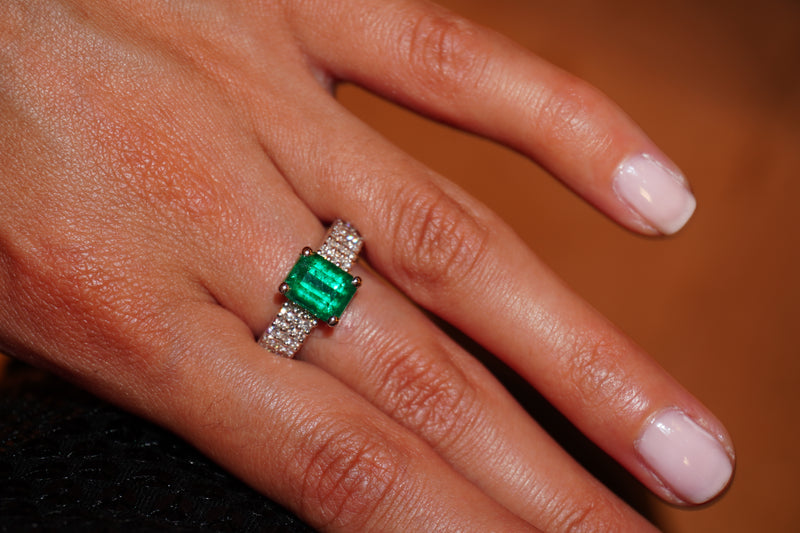
Chez Pierre Marson, chaque création naît de la pierre, et non l'inverse. Chaque émeraude est étudiée avant que l'orfèvre ne commence son travail. La taille de l'or, l'angle des griffes, le poids de l'anneau — tout est déterminé par ce dont la pierre a besoin pour être mise en valeur. Nos orfèvres travaillent dans la tradition de la joaillerie française classique, à la main, avec patience.
Un bijou porteur d'histoire
Lorsque vous portez un bijou Pierre Marson, vous portez cinq siècles d'histoire colombienne, quarante ans d'expertise et des centaines d'heures de travail d'orfèvrerie. La pierre se souvient d'où elle vient. La pièce est conçue pour que cela ne soit jamais oublié.
Découvrir la collection« Le jardin n'est pas un défaut. C'en est la preuve. »
Pierre Marson · Sur les émeraudes de ColombieÉducation Émeraude
Il fait spécifiquement référence aux émeraudes extraites en Colombie — notamment des districts de Muzo, Chivor et Coscuez à Boyacá. Les émeraudes colombiennes sont généralement plus pauvres en fer que les émeraudes d'autres origines, ce qui produit une couleur verte plus vive et pure.
L'origine doit être confirmée par une certificat gemmologique indépendante. Toute allégation d'origine non étayée par un certificat de laboratoire doit être considérée comme non vérifiée.
Leur faible teneur en fer — résultat de la géologie de schiste noir de la région de Boyacá — permet au chrome et au vanadium de produire un vert plus chaud et plus saturé que les émeraudes de Zambie, du Brésil ou d’Afghanistan. Muzo produit les verts les plus profonds et les plus chauds. Chivor tend vers un vert plus froid et plus bleuâtre avec une excellente transparence. Coscuez produit un matériau plus clair et plus brillant.
L’origine colombienne est un excellent indicateur du potentiel de couleur — mais la couleur, la transparence et la taille définissent ensemble une pierre véritablement fine.
La qualité est jugée d'après la couleur, la transparence, la taille et le poids en carats — la couleur et la transparence étant les critères les plus importants. Les émeraudes colombiennes les plus prisées présentent un ton moyen à moyen-foncé avec une saturation forte et vive. Observez la pierre à la lumière naturelle du jour et comparez-la côte à côte avec d'autres de taille similaire plutôt que de l'isoler.
Les émeraudes se forment par un processus hydrothermal qui emprisonne naturellement des fissures et des cristaux minéraux à l'intérieur de la pierre. Ce réseau interne – connu sous le nom de jardin – est une caractéristique distinctive de l'émeraude naturelle, et non un défaut. Chaque jardin est unique à sa pierre.
Les inclusions ne deviennent un problème que lorsqu'elles réduisent considérablement la transparence ou compromettent l'intégrité structurelle. Une pierre naturelle sans inclusions visibles à un prix bas est une chose à remettre en question.
La grande majorité des émeraudes naturelles sont traitées à l'huile pour remplir les fissures superficielles et améliorer leur transparence – une pratique utilisée depuis des siècles et largement acceptée dans le commerce. Des laboratoires indépendants classent le degré de traitement, allant de nul à significatif ; c'est ce degré, et non la présence du traitement elle-même, qui affecte la valeur.
Une émeraude traitée reste 100 % naturelle. Ce qui importe, c'est que le degré de traitement soit honnêtement divulgué sur un certificat indépendant.
Commencer par une pierre.
Terminez avec un bijou.
Parlez-nous de l'occasion, de la personne, du sentiment. Nous choisirons la pierre et concevrons la pièce autour d'elle. Chaque création sur mesure commence par une conversation.
Commande sur mesurePrêt-à-porter.
Fait pour durer.
Parcourez notre sélection actuelle — chaque pièce ornée d'une émeraude de Colombie sélectionnée à la main, disponible pour livraison immédiate depuis notre atelier de Madrid.
Voir toutes les pièces